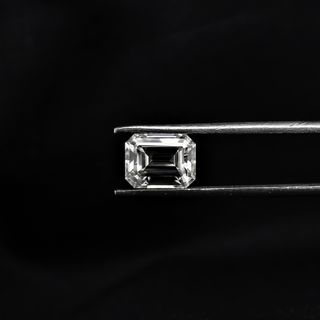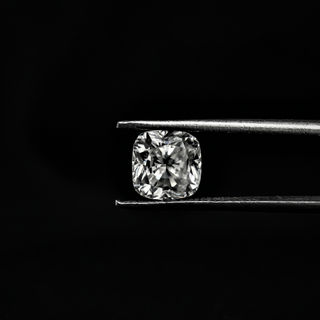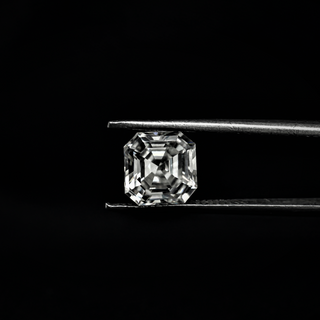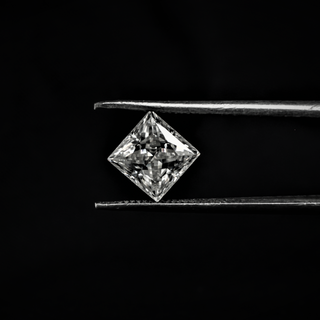
For years, diamonds have been the favored gemstone for engagement rings, upscale jewelry, and luxury goods. However, moissanite has lately gained recognition as an ethical alternative. Both stones sparkle brilliantly. Look stunning, yet they vary greatly in their composition, durability, price, and brilliance.
If you are thinking about a diamond or moissanite for your jewelry, grasping these distinctions will assist you in selecting the option. Let’s delve into what differentiates them and which gem could be the match for your requirements.
What is Moissanite?

Moissanite is a gemstone first found in a meteorite by the French chemist Henri Moissan in 1893. Although natural moissanite is exceedingly uncommon, the moissanite available today is produced in labs utilizing technology. Composed of silicon carbide, it offers strength and sparkle.
What is a Diamond?
Diamonds are naturally occurring gemstones created through pressure and high temperatures far beneath the Earth’s crust over billions of years. Made entirely of carbon, diamonds are valued for their durability, sparkle, and enduring charm. While natural diamonds are more common, lab-grown diamonds offer a friendly alternative with the same chemical and physical properties as natural diamonds.
Which is more sparkling?
Moissanite: Displays a brilliance with a glitter frequently referred to as "fire." Its refractive index results in it producing light flashes more often than a diamond.
Diamond: Features a timeless white light glow referred to as "brilliance." Diamonds showcase a blend of brilliance, fire, and scintillation, which makes them especially appealing to fans of classic jewelry.
For those who enjoy brilliance and vibrant hues, moissanite is an excellent option. If you favor a white-light gleam, diamonds are perfect.
Which is more durable?
Moissanite: Holds a rating of 9.25 on the Mohs hardness scale, making it among the hardest gemstones. It is very resistant to scratches and ideal for use.
Diamond: Occupies the spot on the Mohs scale, designating it as the material. Its highest scratch resistance nature makes it perfect for cherished family keepsakes.
Although both stones are highly durable, diamonds have a hardness rating. If durability is the concern, diamonds are the best choice.
Which is more expensive?
Moissanite: often costs a fraction of the price.
Diamond: More expensive due to rarity, market demand, and mining costs.
When budgets are limited moissanite offers an appearance identical to but at a significantly reduced price. Nevertheless, if you prefer a gemstone, diamonds remain the choice.
Which one is ethical?
Moissanite: Manufactured in a laboratory, ensuring it has lower mining-related impacts and is typically an eco-friendly choice.
Diamonds: Extracted diamonds may raise issues, whereas lab-created diamonds offer a more eco-friendly option.
When prioritizing sourcing, moissanite or lab-created diamonds are the top choices.
Which Option Is Best for You?
Choose moissanite if you want a gemstone that's both remarkably brilliant and responsibly obtained.
Choose a diamond if you appreciate tradition, investment possibility and a sturdy gem available in the market.
If you need a foundation, consider a lab-grown diamond—it offers the beauty of a diamond, with a budget choice

Conclusion
Moissanite and diamonds are two options that people can choose from. They both have some good things about them. Diamonds have been a symbol of love for a long time, but moissanite is a cheaper and more environmentally friendly choice that looks just as nice. When it comes down to it, the best choice for you will depend on what you like, how much money you have, and what you believe in. Moissanite and diamonds are really different, so you have to think about what's important to you when you are deciding between moissanite and diamonds.
FAQs
1. Are you able to distinguish between a moissanite and a diamond?
To the majority of individuals, they appear the same. Moissanite exhibits multicolored brilliance, whereas diamonds reflect a purer white light. Experts can tell them apart with equipment.
2. Does moissanite gradually lose its brilliance?
No. Moissanite maintains its sparkle. Does not turn dull. It is very durable against scratches and daily use.
3. Is moissanite a fake diamond?
No, moissanite is a gem, by itself. Although it looks like a diamond, its chemical composition and optical traits are different.
4. Will moissanite last as long as a diamond?
Yes, Indeed moissanite is a resilient gem that can endure for a lifetime, similar to a diamond.
5. Which is better for an engagement ring: moissanite or diamond?
It depends on personal preference and budget. If you want a classic, luxury gemstone, choose a diamond. If you prefer an affordable, ethical, and extra-sparkly option, go for moissanite.
6. Is moissanite a real stone?
Certainly. It is distinct from a diamond. It has its chemical structure and is created in labs to guarantee consistency and high quality.
7. Does moissanite pass a diamond tester?
Moissanite can pass basic thermal testers because it conducts heat well, testers that also check electrical properties can help separate moissanite from diamond.